About Us
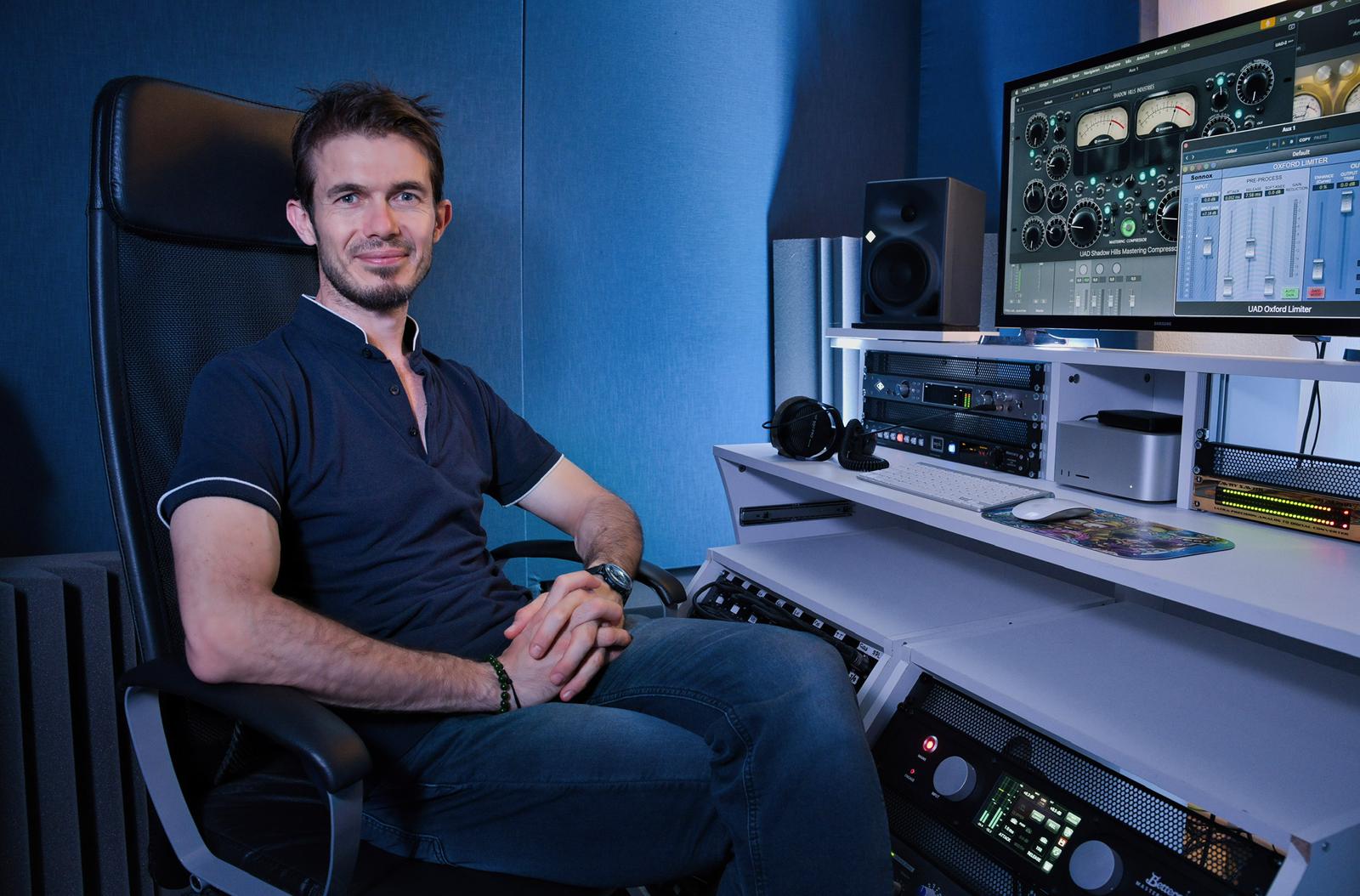
Hello, I’m Kâzım Okan Uysal – a sound engineer with passion and a deep connection to music.
Like many others, my journey began with a love for music. In 2004, I took my first steps in the industry – initially on a small scale, working in hotels, handling stage and lighting setups, soundchecks, and live mixing. It didn’t take long for me to realize: this isn’t just a job – it’s my calling. Once I began earning money from music, it became clear: I had found my path, and there was only one direction – quality, emotion, and sound at the highest level.
After completing my sound engineering training in Istanbul in 2008, I moved to Germany in 2012. At SAE in Hanover, I deepened my knowledge – and discovered my greatest passion: mastering. Since then, I’ve dedicated myself wholeheartedly to this craft.
I work with high-quality, reliable equipment that I trust completely. My goal is to shape music so it sounds powerful, clear, and emotionally resonant across all platforms – without being fatiguing or losing its character. It’s about the perfect sound – one that moves you and stays with you.
Let’s work together toward that goal – I look forward to it.
If you need professional audio services, feel free to contact me via WhatsApp, email, or phone. I look forward to helping you achieve the best sound for your music projects!
At Leakage Audio, we provide professional sound engineering services. Our studio offers the following:
- Mixing – Making your tracks clean, balanced, and professional.
- Online Mastering – High-quality mastering services available online.
- Streaming Mastering – Specialized mastering for platforms like Spotify and Apple Music.
- Stem Mastering – Mastering using separate instrument groups (stems).
- Single Mastering – Specialized mastering for single tracks.
For more information about our services, feel free to contact us via WhatsApp, email, or phone.
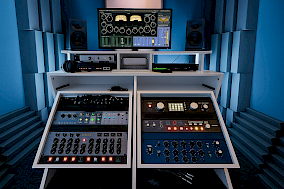
- Neumann KH 120A
- Neumann KH 750 Sub
- Apollo x6 Generation 2 Interface
- Apollo PlugIns
- SSL Fusion
- SSL the Bus+
- Manley Massive Passive Mastering EQ
- Tube Tech SMC 2BM Mastering Multiband Kompressor
- Bettermaker Mastering Limiter V.2
- SPL Mercury 1730 Mastering Wandler DA
- Lavry Gold AD Mastering Wandler
Mastering is the final technical stage in music production. However, before reaching this point, the production process passes through a number of important technical steps. This text summarizes the journey from recording to mastering from a technical perspective.
The first step after recording is the editing process. Even though great care is taken during recording, unwanted noises, silences, or unnecessary elements often need to be removed. These edits are crucial for maintaining the structural coherence and clarity of the track. This “cleanup” also creates space for the mix process and helps highlight the core sonic character.
Next comes the mixdown, which involves balancing all musical elements, positioning them in the stereo field (panning), and adjusting the frequency spectrum. Essential tools used during this phase include EQs (equalizers), compressors, reverb, delay, and other audio effects. Each channel (e.g., vocals, guitar, drums) is evaluated individually, and when needed, similar instruments (e.g., backing vocals, percussion) are grouped and processed together to achieve a cohesive sound.
The mixing process involves not only technical but also aesthetic decisions. This stage defines the emotional tone and dynamic structure of the piece, aiming to bring all elements together into a unified sonic whole.
Once the mixdown is complete and approved by the artist or producer, the final technical stage begins: mastering. The mixed track is treated as a whole and generally balanced within the audible frequency range (usually between 20 Hz and 20 kHz). The main goal is to ensure consistent and balanced playback across various listening environments (headphones, studio monitors, car audio systems, mobile devices, etc.) and digital platforms (Spotify, YouTube, Apple Music, etc.).
Techniques used during mastering include general EQ adjustments, multiband compression, stereo width adjustments, transient enhancement, light saturation or tape effects, limiter applications, and loudness optimization. If needed, dithering is also applied to minimize digital resolution loss.
Format and Delivery
The file formats delivered after mastering are determined by the intended release platform. For digital distribution, the industry standard is typically 44.1 kHz / 24-bit WAV. For physical formats (such as audio CDs), 44.1 kHz / 16-bit WAV is used. The format is usually agreed upon after a brief technical assessment at the start of the project and a conversation with the client.
After all technical processes are complete, the result is a piece that offers an intuitive sonic unity for the listener and is optimized in both frequency distribution and dynamics. Once the final product is approved by the client, the mastering process is considered complete.
How are mastering prices determined?
Prices vary depending on the number of tracks, the type of mastering (stereo or stem), and the delivery time.
Is there a revision option?
Yes, every mastering service includes one free revision. Additional revisions can be made for a small extra fee.
What is the delivery time?
Delivery is usually within 2–3 business days. An express delivery option is also available.
How can I make a payment?
We accept payments bank transfer, or PayPal.
Do you offer mastering suitable for streaming platforms?
Yes, mastering is done according to the appropriate LUFS levels for Spotify, Apple Music, YouTube, and other platforms.
Can I send a reference track?
Of course! We recommend sending reference tracks to better understand your style.
Why does the audio sound louder after mastering?
During the mastering process, dynamic range, compression, and limiter settings are optimized, making the sound fuller and clearer.
Can I get consultation before mastering?
Yes, we offer a free pre-listening service to check whether your mix is ready for mastering.
Can I request changes after mastering?
Yes, we make the necessary adjustments after receiving your feedback.
Can I get a discount if I work with you again?
We offer special discounts for returning clients. You can contact us to learn more details.